Reconciliation: What It Means, Why It Matters, and How We Can Be “All In” Every Day
Reconciliation isn’t a feel-good moment on the calendar. It’s a long, shared effort to tell the truth about our history, recognise First Nations peoples as the oldest continuing cultures on Earth, and build a fairer future together. It asks something of all of us, not just governments, not just organisations, and not just Aboriginal and Torres Strait Islander peoples who have carried the weight for too long.
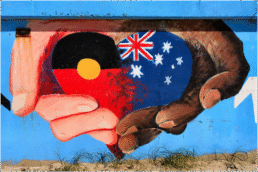
This year’s National Reconciliation Week theme, “All In,” is a clear call to commit wholeheartedly to reconciliation every single day at home, at school, in the workplace, and in our communities. It’s a reminder that reconciliation isn’t someone else’s job. It’s ours, together.
National Reconciliation Week runs 27 May to 3 June, a powerful week that holds two significant dates in Australia’s story: 27 May marks the 1967 Referendum, and 3 June marks the 1992 Mabo decision. Those dates matter because they remind us that reconciliation is both historical and current, it’s about what has happened, what continues to happen, and what we choose to do next.
A short history: why reconciliation exists in the first place
To understand reconciliation, we have to start with truth.
For more than two centuries, Aboriginal and Torres Strait Islander peoples have experienced dispossession, violence, exclusion, and policies that removed children from families, restricted movement, controlled wages, and attempted to erase culture and identity. These impacts didn’t disappear when the policies changed, they continue through intergenerational trauma and through unequal outcomes in health, justice, education, housing, and employment.
Reconciliation emerged as a national movement because many Australians recognised that we can’t build strong relationships without facing the truth, and we can’t claim fairness while structural inequality remains.
Some major milestones in the national journey include:
- 1967 Referendum (27 May 1967): A landmark moment in which Australians voted overwhelmingly to amend the Constitution so the Commonwealth could make laws for Aboriginal people and so Aboriginal people could be counted in the census.
- Mabo decision (3 June 1992): The High Court recognised that the concept of terra nullius (land belonging to no one) was wrong, and affirmed the existence of Native Title.
- Bringing Them Home report (1997): A national inquiry that documented the Stolen Generations and the impacts of forced removals.
- National Apology (2008): A formal apology to the Stolen Generations, acknowledging the harm caused by past policies.
- Uluru Statement from the Heart (2017): A generous invitation for a better future through Voice, Treaty and Truth.
This history isn’t a checklist. It’s a reminder that reconciliation is about rights, truth, justice, determination and relationships and that the “work” is unfinished.
What reconciliation means at an individual level
At its heart, reconciliation is relational. It’s how we show up in everyday life, what we choose to learn, what we ignore, what we challenge, and how we treat people.
1) Learning and staying teachable
Reconciliation asks us to stretch beyond what we were taught at school, beyond stereotypes, and beyond “good intentions.”
That can look like:
- Learning the history of the Country you live and work on.
- Reading and listening to First Nations voices not just during National Reconciliation Week.
- Understanding why “closing the gap” is not just about services; it’s also about power, systems, and self-determination.
A good mindset shift: move from “I didn’t know” to “I’m responsible for learning.”
2) Relationships, moving from awareness to connection
Reconciliation isn’t only knowledge. It’s also trust built over time.
At an individual level, that might mean:
- Showing up to community events and listening respectfully.
- Supporting First Nations businesses, artists, educators and organisations in meaningful ways.
- Not expecting First Nations people to educate you on demand and doing your own homework first.
Relationships grow when people feel safe, respected, and not tokenised.
3) Courage, calling out racism in all its forms
If reconciliation is real, it changes what we tolerate.
Racism isn’t only loud or obvious. It can be:
- Interpersonal: slurs, jokes, stereotypes, dismissive comments, “casual” racism.
- Institutional: hiring practices that exclude, policies that ignore cultural obligations, unequal service access.
- Systemic and entrenched: patterns built into systems over decades like over-policing, inequitable outcomes, and barriers to justice and opportunity.
Being “All In” means:
- Speaking up when someone makes a racist comment even if it’s awkward.
- Interrupting stereotypes, “othering,” and deficit narratives.
- Challenging the quiet assumptions that shape decisions: Who is seen as credible? Who gets the benefit of the doubt? Who gets invited in?
A practical approach is the three-step call-in / call-out:
- Name what happened (“That comment relies on a stereotype.”)
- Explain the impact (“It creates harm and normalises racism.”)
- Offer a better way (“Let’s reframe this respectfully / base decisions on evidence.”)
You don’t have to be perfect. But you do have to be consistent.
What reconciliation means at an organisational level
Organisations play a major role because workplaces shape opportunity, culture, and decision-making. At this level, reconciliation is not a poster, a statement, or a one-off event. It’s strategy, accountability, and behaviour.
1) A clear commitment that goes beyond words
A strong organisation doesn’t ask, “What do we say?” first. It asks, “What will we do and how will we measure it?”
That’s why many organisations use a Reconciliation Action Plan (RAP) not as a branding exercise, but as a practical roadmap to:
- strengthen relationships,
- increase respect and cultural safety,
- improve opportunities and outcomes,
- and embed accountability into governance.
2) Cultural safety and capability built into the system
Training can be useful, but training alone is not enough. Organisations need cultural safety embedded into:
- HR policies and recruitment pathways,
- procurement and supplier diversity,
- leadership expectations and performance,
- workplace conduct and grievance pathways,
- and service design (especially where community impact is high).
A useful test: If the culture depends on one or two passionate staff members, it’s fragile. Reconciliation must live in the system, not just in individuals.
3) Truth-telling and risk management
Avoiding hard conversations doesn’t reduce risk, it increases it.
Organisations that are “All In”:
- acknowledge what they don’t know,
- address historical and current impacts in their sector,
- and create safe ways for people to raise concerns.
This includes being honest about:
- systemic bias in policies and decisions,
- representation gaps in leadership,
- and how “business as usual” can unintentionally exclude.
4) Shared benefit, not extraction
Reconciliation also means changing how value flows.
If organisations benefit from First Nations culture, knowledge, art, or identity, they must ensure:
- ethical engagement,
- proper consent and cultural authority,
- fair payment,
- Indigenous Cultural and Intellectual Property (ICIP) protections,
- and outcomes that genuinely support First Nations people and communities.
The goal is not to “use culture.” The goal is to work in ways that respect culture and build long-term benefit.
How we can stretch ourselves: from symbolic to meaningful
Being “All In” is a daily practice. Here are practical ways to lean in as individuals and as organisations especially during National Reconciliation Week.
Be part of what’s happening (and bring others with you)
- Attend a local event (or host one), music, storytelling, community gatherings.
- Follow and share initiatives like Voices for Reconciliation, where choirs across the country join in song to amplify a shared call to action.
Use your workplace or school as a platform for change
- Explore resources like Narragunnawali for schools and early learning services.
- Start conversations in your team: What would meaningful action look like here?
- Consider developing or strengthening a RAP to guide consistent, measurable work.
Make your everyday choices count
- Pay attention to what you read, watch, and engage with and whose voices are centred.
- Support First Nations businesses and creators.
- Reflect on the role you can play in advancing justice, equality, and respect not only awareness.
A simple reflection: “All In” starts with one honest question
If you’re wondering where to start, begin here:
- What do I need to learn that I’ve avoided?
- Where have I stayed silent when I should have spoken up?
- What can I change in my work or workplace that will outlast me?
- How can I contribute without putting the burden on First Nations people?
Reconciliation isn’t about guilt. It’s about responsibility and possibility. It’s about becoming the kind of country where truth is not feared, relationships are not transactional, and dignity is not negotiable.
This National Reconciliation Week and every week after, let’s be All In.