Cheap laughs aren’t cheap - who pays for them?
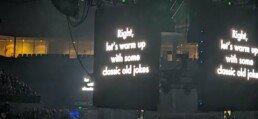
I went to see Jimmy Carr at John Cain Arena recently.
And I want to be upfront: I used to like him.
Like a lot of people, my relationship with Jimmy Carr has been shaped by curated clips on social media, the tight comebacks, the crowd work, the heckler rebuttals that land clean and feel earned. That version is often sharp, even enjoyable. But in the room, in the full show environment, something hit differently. Not because I’m precious. Not because I don’t “get” comedy. But because I left thinking about who was repeatedly positioned as the punchline and what the audience was being invited to rehearse together.
This is not a call to ban comedy, and it’s not a pearl-clutch. It’s a reflection on how “just jokes” can become permission: permission to step backwards, to normalise stereotypes, and to treat the lived experience of already-targeted communities as entertainment for the majority, with complete disregard for the tireless efforts of advocating for better outcomes; many years dismissed in one ‘just’ joke.
How it opened: First Nations and Acknowledgement of Country as a target
The tone was set early.
The show opened with material about Acknowledgement of Country that, to me, felt dismissive, played for laughs rather than understanding. What stuck with me wasn’t only the joke, but the reaction: cheers and clapping.
I remember thinking: applause can work like a shield. In an arena, it’s the live version of a downvote. You don’t have to engage with the substance, you just overwhelm it. And in that moment, the applause felt less like “we understand this” and more like “thank you for saying what we wanted to hear”, we can now amplify this safely to being more bigoted.
The irony is, Acknowledgement of Country isn’t a trend or a script. It’s a protocol with purpose, recognising Traditional Owners and Custodians, understanding historical context, recognising past injustices, and building respectful relationships. That’s exactly the kind of cultural capability work DACC supports organisations to build properly, with confidence and care. If a foreign visitor was to provoke thoughts of how England should do this, as an example, should abolish the ‘Crown’, I am sure that you would be booted from the country.
So I left the opening thinking: if a room can be trained to laugh at a basic protocol of respect, what else will it be trained to dismiss?
The “not for you” shield
There’s a familiar defence attached to Jimmy Carr’s brand: jokes attract some people and repel others; if you’re repelled, the show isn’t for you. That framing is literally part of the tour marketing.
On the surface, it sounds reasonable: don’t like it, don’t go. But it also works like a conversational deadbolt. It shifts the focus from impact to taste. It turns harm into preference. And it places the burden on the person who flinches, you’re the problem for not laughing, rather than interrogating what the joke is doing in the world. Scanning the area near me, it was noticeable that many chose not to laugh ‘often’ to a half chuckle at other times. Furthermore, many people leaving well before the show’s completion. To be fair, there were many people cheering and applauding, and these are the target market, predominantly, white, males, straight, able, and more than likely Catholic. These are your lottery winners right here.
That’s where the “cheap laughs” come in.
Because the laughs aren’t actually cheap. They’re just inconsequential for the person holding the mic and often inconsequential for the people laughing. The cost gets externalised to someone else: the people whose identities keep getting flattened into a predictable set of tropes. Even those small minorities will self-select and laugh, just to fit it.
Punchlines, power, and the DEI “usual suspects”
There’s a pattern many of us recognise: the “safe targets” for edgy comedy are often the same groups and organisations now place under the DEI umbrella. People with disability. Migrants. Queer and trans communities. Women. Religious minorities. First Nations people. Refugees. Anyone who already knows what it feels like to be singled out, talked over, or treated as less-than.
What struck me wasn’t one single line, it was the repetition and the rhythm of it. The sense that whole chunks of the show were built around making marginalised people the butt of the joke, over and over, while the “default” centre; the privileged white man, the inherited power systems, the British Empire legacy that shapes so much of what gets called “normal” largely sits outside the target zone.
That imbalance matters. Because comedy isn’t just content. It’s a live social exercise. A room full of people rehearsing what is acceptable to say out loud.
“If you can’t laugh…” is not neutral
The line “if you can’t laugh, this isn’t the show for you” functions like a cultural sorting hat. It tells the audience: your discomfort is the evidence you don’t belong here. And in a packed arena, that becomes a cue: laugh, or be labelled humourless, uptight, fragile, woke, whatever the flavour is this week.
There’s serious scholarship that cuts through the noise here: the question isn’t only what attitudes a joke expresses, or what the comedian “really believes”. The sharper question is: what does the joke do in that context, to that audience, at that moment?
Because audiences matter. If a joke helps undermine anti-discriminatory norms or reinforces damaging stereotypes, it’s not harmless just because it’s wrapped in laughter.
The 1950s vibe: when laughter becomes a rollback
This is the part I’m still sitting with: the crowd response. Not everyone, but enough to notice. The feeling that some people weren’t just laughing at a clever turn of phrase they were laughing at the relief of being allowed to laugh at “those people” again.
That’s what I mean by “steps taken back to 1950s thinking”. It’s not nostalgia for the decade. It’s nostalgia for the old hierarchy: who gets to speak, who gets to be complicated, who gets to be human and who gets reduced to an object for entertainment.
And if you’re someone who lives inside one of those target categories, you don’t experience it as abstract debate. You experience it as a reminder: people still find this funny; people still think this is okay. People still normalise it.
The “new ancestors” narrative: when settlers are recast as sacred
You’ll hear it more and more: Jimmy Carr asserted that we should borrow from Aboriginal thinking of respecting ancestors, and apply this to ‘the founders of Australia’; they built this country; they’re the new wave of ancestors. Sometimes it’s delivered like a call for unity almost like a moral upgrade: respect them the way First Nations respect our ancestors.
But that comparison isn’t neutral. It’s not a bridge. It’s a sleight of hand.
First Nations respect for Ancestors is tied to Country, lore, obligation, and continuity. It’s relational. It’s accountable. It comes with responsibilities that don’t stop when it’s inconvenient.
Recasting colonisers and empire‑builders as “ancestors” in that same frame asks First Nations people to validate a national origin story that still refuses to tell the truth about how the “building” happened. It borrows the language of reverence without the cultural authority and without accountability.
And this is where it starts to drift into the hard‑right “common sense” genre: grievance dressed up as reason, the dominant group positioned as the misunderstood victim, and the country’s story reframed so no one has to sit with discomfort.
In practical terms, it becomes permission to say:
- “We built this. You should be grateful.”
- “Stop being sensitive.”
- “Stop talking about racism; it’s in the past.”
- “If you don’t like it, this country isn’t for you.”
That’s not unity. That’s compliance.
I can hold complexity here. People did migrate. People did labour. Infrastructure got built. But the question is: built on what, and at whose cost? If the story keeps centring the “builders” while minimising dispossession, violence, exclusion, and ongoing impacts, then the “new ancestors” narrative becomes another way to lock in a hierarchy: dominant group as heroic origin, everyone else as a footnote.
And yes, this links back to comedy. Because the same mindset sits underneath cheap laughs: the idea that some people are fair game; discomfort is weakness; and calling something out is an attack on “our culture”.
From cultural permission to slogans
Here’s the uncomfortable link: cultural permission doesn’t always stay in a room.
When you normalise the posture of “why do we even do this?” about Acknowledgement of Country, you create space for the broader ecosystem of dismissal, the “fit in or f*** off” energy, the “we’re full” messaging, the sense that inclusion is an imposition.
This isn’t theoretical. Museums Victoria documents the “Piss Off We’re Full” sticker as white superiority messaging, tied to anti‑migration sentiment and echoing the iconography of the former White Australia policy. This is clearly articulated today in standing pillars to the One Nation party stance on immigration and religion.
That’s an example of how exclusionary slogans operate in public life and how quickly “just words” becomes social permission, amplified through its casual natured vernacular.
Misogyny: the part that didn’t feel like comedy
I also can’t ignore what the night made me think about women.
Some material landed, to me, as misogynistic, not just crude, but diminishing: women framed as objects, as problems to manage, as bodies to rate, as there to serve men’s entitlement. I’m not claiming intent. I’m describing impact. What do we and what should we tell our young boys about women’s respect?
And this is personal. My own dad was a misogynist. I vowed early that I would never be like him, that I’d do the work of self‑intervention, unlearning, choosing better. So when a room laughs at material that reinforces old ideas about women, their body parts, their private bits, it doesn’t feel harmless. It feels like reinforcement. It tells men they don’t have to grow. It tells women to absorb it. It tells everyone that the hierarchy is still welcome as long as it’s delivered with a punchline.
If we ever wonder why misogyny keeps surviving, we don’t have to look far. It survives wherever it’s still rewarded and comedy can be one of those places.
The missing accountability: speaking “about” others, not “for” your own
Here’s another tension I couldn’t ignore. It’s common for comics to speak about marginalised groups, to make confident statements, to riff on identities and experiences they don’t carry. But far less common to see that same energy turned inward: speaking critically about their own group norms, their own privilege, their own inherited systems.
I’m not saying nobody can ever joke cross-culturally. I’m saying there’s a difference between risk and recklessness.
Risk in comedy can be powerful satire can punch up, expose hypocrisy, take on institutions, and make the powerful uncomfortable. Recklessness is when the “risk” is actually borne by people who are already bearing enough.
One-liners without a story don’t have a “why”
Another practical piece: I also found the show structurally thin. Jimmy Carr is known for one-liners. But when there’s no continuity. no thread, no deeper theme, no story arc that reveals insight the jokes can become a conveyor belt of shocks yearning for the next punchline fetching towards a rebuttal tool for hecklers on other shows.
And when the “shock” is often anchored in stereotypes about marginalised people, the whole thing starts to feel like it’s trading on the oldest shortcut in the book: difference as humour: haha.
Curated social content hides this. A single clip can be funny. But a whole night of it can start to feel like a worldview, even if it’s denied as “just jokes”.
We already know this playbook and it keeps repeating
We’ve seen the broader public cycle before: controversial material circulates, people call it out, defenders say “it’s comedy”, critics are told to lighten up, and the debate becomes about “cancel culture” rather than the communities impacted. Coverage around past Jimmy Carr controversies shows how quickly the conversation shifts to his right to offend, instead of sitting with what the material normalises.
Again: this isn’t about pretending offence doesn’t exist at comedy shows. It’s about refusing to treat harm as collateral.
A governance lens: comedy has decision-rights too
At DACC we talk a lot about governance, not as bureaucracy, but as clarity: who has authority, who is protected, what’s the evidence trail, and who carries the risk.
We build work “where governance, reputation and First Nations cultural integrity intersect” and we care about measurable outcomes, not just intention.
So here’s the governance question I keep coming back to:
If a joke relies on turning a marginalised group into a punchline, and the audience laughter reinforces a stereotype, who benefits, and who pays?
If the “benefit” is a quick laugh and the “cost” is a deeper groove in the stereotype track, that’s not neutral entertainment. That’s social conditioning with applause.
What I wish was different (and what I’m asking for)
I’m not asking every comedian to become a policy analyst. I’m asking for basic ethical maturity:
- Punch up more than you punch down.
- Interrogate the default centre class, empire, whiteness, wealth, institutional power – not just the usual DEI targets.
- Stop outsourcing the cost to communities who already deal with discrimination without buying a ticket to it.
- Own the impact instead of hiding behind “it’s only a joke” or “it’s not for you.”
The best comedy does more than shock. It reveals. It punctures the powerful. It tells the truth in a way that makes us wince, then think.
But cheap laughs? Cheap laughs are easy. And they are rarely harmless.
If you laughed (or didn’t): sit with why
If you went and laughed all night, I’m not here to moralise. But I do think it’s worth asking:
- What exactly was I laughing at?
- Who was the repeated target?
- Would this still feel “just jokes” if I lived that experience?
- What does my laughter endorse in a room full of strangers?
Because in the end, audiences aren’t passive. We’re participants. And participation has consequences even when the ticket says “comedy”.